Introduction to Small Scale Charcoal Briquette Production
The production of small-scale charcoal briquettes is a practical approach to utilizing agricultural and forestry waste for energy solutions. Charcoal briquettes are favored for their efficiency, affordability, and reduced environmental impact compared to traditional fuel sources. The process of producing them on a small scale is relatively straightforward, making it accessible for individuals and small businesses. This article explores the stages involved in the production of small-scale charcoal briquettes, highlighting key steps and considerations.
Gathering Raw Materials
The first step in producing small-scale charcoal briquettes is gathering suitable raw materials. These materials typically include agricultural residues such as coconut shells, sawdust, corn stalks, or rice husks. The choice of raw material depends on availability and desired briquette characteristics. The collected materials should be dry, as lower moisture content leads to more efficient carbonization and combustion.
Carbonization of Raw Materials
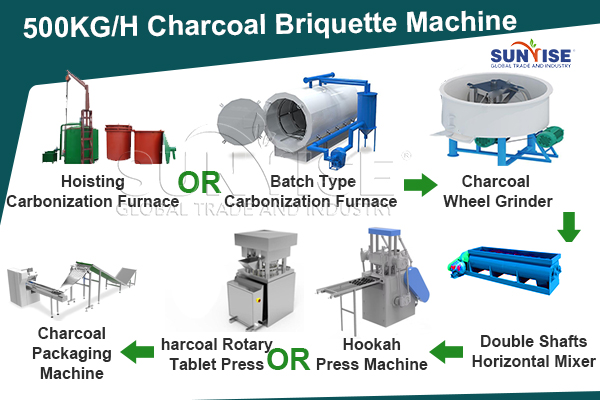
Once the raw materials are collected, they undergo carbonization to convert them into charcoal. This involves heating the materials in a controlled, oxygen-limited environment. Small-scale producers often use simple earth kilns or metal drums for this process. The raw materials are ignited and sealed to limit air entry, allowing them to smolder and transform into charcoal over several hours. The carbonization process is crucial as it influences the briquettes’ energy content and burning efficiency.
Crushing and Sifting
After carbonization, the resulting charcoal is left to cool before it is crushed into a fine powder. This step ensures uniformity in the final product. Crushing can be done using simple tools like hammers or more efficient mechanical crushers for larger batches. Once crushed, the charcoal powder is sifted to remove larger particles and impurities, ensuring consistent quality in the briquettes.
Mixing and Binding
The powdered charcoal is then mixed with a binding agent to form a cohesive mixture. Binders such as cassava starch, corn starch, or molasses are commonly used. The binder helps to hold the charcoal particles together during compression. The typical binder ratio is about 5-10% of the total mixture. It is essential to mix the charcoal and binder thoroughly to achieve a uniform consistency, which will affect the briquette’s strength and combustibility.
Molding and Drying
Molding the mixture into briquettes is the next step. This is done using simple hand presses or small-scale briquette machines that compress the mixture into specific shapes. The briquettes are then set out to dry, either in the sun or in a drying chamber. This drying phase is critical to remove moisture introduced by the binder, ensuring the briquettes burn efficiently.
Advantages and Considerations
Small-scale charcoal briquette production offers numerous benefits, especially in rural or underdeveloped regions. It provides an avenue for utilizing waste materials, reducing environmental impact, and increasing local employment opportunities. Additionally, briquettes burn cleaner and longer than raw biomass, making them a superior energy source. However, producers must consider factors like consistency of raw material supply and access to appropriate equipment to ensure sustainable production.
Conclusion: A Step Toward Sustainable Energy
The small-scale production of charcoal briquettes represents a vital step towards sustainable energy solutions. By transforming waste into efficient fuel, this process not only addresses energy needs but also contributes to environmental conservation. As communities and individuals increasingly adopt this practice, charcoal briquettes can play a significant role in promoting energy independence and sustainability. Visiting: https://www.char-molder.com/2024/04/19/small-scale-charcoal-briquette-making-in-philippines/
Leave a Reply