Introduction to Coconut Shell Charcoal Briquette Production
Coconut shell charcoal briquettes are a popular and environmentally friendly fuel source, known for their high calorific value and low emissions. Producing these briquettes efficiently requires specialized machinery capable of handling the tough and fibrous nature of coconut shells. For a production capacity of 3 tons per hour, several machines are essential in the conversion process from raw coconut shells to finished briquettes. Understanding the role of each machine in this production line aids in optimizing efficiency and output.
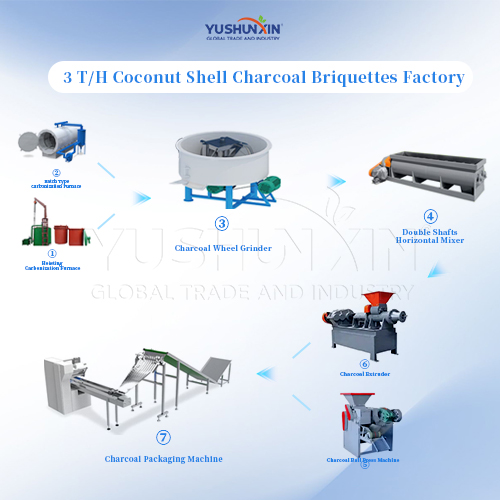
Crushing and Milling Machines
The first step in the production of coconut shell charcoal briquettes is the crushing and milling of raw coconut shells. A coconut shell crusher is employed to break down the shells into smaller, manageable pieces. This machine typically uses a hammer mill or roller mill mechanism to effectively reduce shell size. Following the initial crushing, a fine milling machine or pulverizer further processes the material into a fine powder, which is crucial for uniform carbonization and briquette formation. Reliable crushing and milling machines ensure a consistent feedstock, which is key to achieving a high production rate.
Carbonization Equipment
Once the shells are milled, they undergo carbonization to convert the organic material into charcoal. A coconut shell carbonization furnace is essential in this process. Typically, this furnace operates using a continuous or batch system, depending on the production scale and efficiency requirements. The furnace heats the material in an oxygen-limited environment, effectively transforming it into charcoal while minimizing emissions. Modern carbonization equipment comes equipped with energy recovery systems, allowing for the reuse of heat and gases generated during the process, thereby enhancing sustainability.
Mixing and Briquetting Machines
After carbonization, the charcoal powder is mixed with a binding agent to form a cohesive mixture. A mixer machine combines the charcoal powder with binders like starch or molasses, ensuring uniformity and consistency in the briquettes. Following mixing, the material is fed into a briquette press machine. This crucial piece of equipment compresses the mixture into briquettes of desired shapes and sizes, using either a hydraulic, mechanical, or screw-driven mechanism. For a capacity of 3 tons per hour, robust and efficient briquetting machines are necessary to maintain continuous production without compromising quality.
Drying Machines
The final step in the production process is drying the briquettes to eliminate residual moisture and enhance their burning properties. A briquette dryer or drying tunnel is used to achieve this goal. These dryers use hot air circulation or infrared technology to uniformly dry the briquettes, ensuring they are ready for packaging and distribution. Efficient drying machines are vital for maintaining the structural integrity and performance of the briquettes, thus ensuring they meet market standards.
Conclusion
Producing 3 tons per hour of coconut shell charcoal briquettes requires a well-coordinated production line with specialized machinery at each stage. From crushing and milling to carbonization, mixing, briquetting, and drying, each machine plays a critical role in ensuring efficiency and quality. By investing in reliable and efficient equipment, producers can optimize production, reduce waste, and contribute to sustainable energy solutions, making coconut shell charcoal briquettes a viable alternative fuel source.
Leave a Reply