Why Activated Carbon Is a Booming Business Opportunity
The global demand for activated carbon is surging as environmental regulations tighten across water treatment, air purification, food processing, and industrial emission control. Activated carbon is a highly porous adsorbent material made from high-carbon feedstocks such as coconut shells, wood, coal, and agricultural wastes. A successful activated carbon business turns low-cost biomass or coal into high-value products while meeting strict safety and emission standards. With steady demand from municipal utilities, manufacturers, and environmental projects, activated carbon production offers stable, scalable profit potential.
Define Your Raw Materials and Business Model
Before purchasing equipment, clarify your raw materials and target product. Common feedstocks include coconut shell, hardwood, coal, rice husk, and nut shells. Coconut shell carbon is premium for high-adsorption applications; coal-based carbon suits large-scale industrial use; wood and biomass versions are eco-friendly and low-cost.
Your business can focus on three models:
1.Powdered activated carbon (PAC) for water treatment and food decolorization
2.Granular activated carbon (GAC) for filtration and air purification
3.Pelletized/formed carbon for gas treatment and industrial systems
Revenue comes from direct product sales or a blended model with toll-processing fees. The best structure depends on local material supply, transport costs, and regional buyers.
Choose the Right Production Line Setup
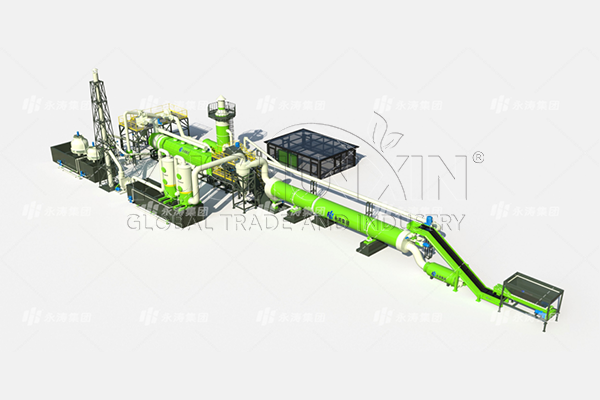
A complete activated carbon line includes four core modules: crushing, drying, carbonization, and activation.
1.Crushing system: Wood crushers and dual-shaft shredders reduce raw materials to consistent particle size.
2.Drying system: Rotary dryers lower moisture below 15% for stable thermal processing.
3.Carbonization furnace: Converts feedstock into char under oxygen-limited conditions.
4.Activation furnace: Uses steam or chemical activation to develop pore structure, the key to high adsorption performance.
Optional finishing includes grinding, sieving, and packaging to meet buyer specifications. Modern lines feature waste heat recovery and flue gas treatment for efficiency and compliance.
Plan for Dust, Safety, and Compliance
Activated carbon production is not just “heating and cooling.” Fine carbon dust requires strong dust collection, ventilation, and explosion protection. Worker safety, noise control, and fire prevention must be built into the layout. You will likely need permits for waste handling, air emissions, and chemical storage if using chemical activation. Continuous monitoring of temperature and pressure ensures stable quality and safe operation.
Build Sales Channels for Activated Carbon Products
Profitability depends on consistent offtake. Key buyers include water treatment plants, air purification companies, food and beverage factories, pharmaceutical producers, and environmental engineering firms. Premium grades command higher prices for drinking water, medical, and electronic applications. Work with distributors and industrial partners early, and tailor your product specs—particle size, surface area, pore volume—to match buyer requirements.
Start Small, Prove Quality, Then Scale
Most new operators begin with a compact semi-continuous line to control upfront investment. Once raw material supply and sales channels are stable, upgrade to fully automatic continuous lines with higher output and lower operating costs. When selecting machinery, prioritize reliability, after-sales support, energy efficiency, and adaptability to different feedstocks.
With the right production line and clear market positioning, activated carbon manufacturing becomes a profitable, compliant, and fast-growing business that rides the global wave of environmental protection and green industry expansion.
Leave a Reply