Sawdust is rapidly gaining attention as one of the best raw materials for producing biochar briquettes. With the global push toward sustainable energy solutions and carbon-neutral practices, the use of biomass residues like sawdust not only offers a cost-effective solution but also supports environmental goals. In this post, we explore the reasons why sawdust is a smart choice for biochar briquette production.
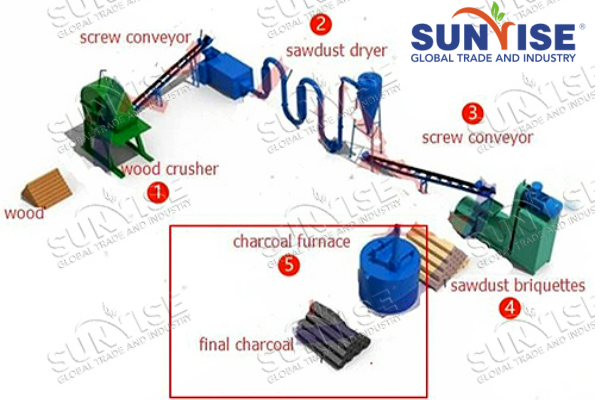
1. Abundant and Readily Available
Sawdust is a by-product of wood processing industries such as sawmills, carpentry workshops, and furniture factories. In many regions, sawdust is generated in massive quantities, often treated as waste. Utilizing this abundant biomass not only reduces environmental pollution but also creates a valuable product from what would otherwise be discarded.
2. Low Moisture Content and High Volatility
Compared to other biomass materials, sawdust generally has lower moisture content, especially when stored properly. This makes it easier to carbonize and compress into briquettes without excessive drying. Additionally, sawdust contains volatile organic compounds that make it an ideal candidate for pyrolysis, enhancing the efficiency and yield of biochar production.
3. Consistent Particle Size
Uniformity in particle size is critical for producing high-quality briquettes. Sawdust particles are naturally fine and consistent, which helps improve the compression process during briquette formation. The result is a denser, more durable briquette with better combustion properties.
4. Improved Carbon Sequestration
Biochar made from sawdust has a stable carbon structure, making it an effective carbon sink. When used in soil, it can remain stable for hundreds of years, helping reduce greenhouse gas emissions. This makes sawdust-based biochar particularly attractive for use in carbon offset projects and regenerative agriculture.
5. Enhanced Energy Value
Sawdust biochar briquettes have excellent calorific value, making them a reliable alternative to traditional fossil fuels like coal. Their clean-burning nature produces less smoke and ash, making them ideal for residential and industrial heating.
6. Eco-Friendly and Economical
Turning sawdust into biochar briquettes is a win-win for the environment and the economy. It reduces landfill waste, lowers the demand for deforestation-based fuels, and provides local communities with a renewable source of energy.
Conclusion
Choosing sawdust as the raw material for biochar briquettes is both practical and sustainable. Its physical properties, availability, and environmental benefits make it one of the top choices for producers looking to create clean energy solutions while reducing carbon footprints. Visiting: https://www.char-molder.com/product/sawdust-briquette-charcoal-making-machine/
Leave a Reply