Introduction to Sawdust Charcoal Briquette Production
Sawdust charcoal briquettes are a sustainable energy solution derived from wood waste. These briquettes are an eco-friendly alternative to traditional fossil fuels, offering a cleaner and more efficient form of energy. The production of sawdust charcoal briquettes involves several steps, each crucial to ensuring the quality and efficiency of the final product. A production capacity of 1 ton per hour (t/h) is a significant output, requiring careful planning and execution throughout the production process.
Raw Material Selection and Preparation
The process begins with the selection and preparation of raw materials. High-quality sawdust, typically sourced from sawmills or woodworking factories, forms the primary raw material. The selected sawdust must be dry, with a moisture content ideally below 12%, to ensure efficient briquetting and combustion. Any impurities, such as stones or metal fragments, should be removed to prevent damage to equipment and maintain the purity of the briquettes.
Drying Process
Before briquetting, the sawdust must undergo a drying process to achieve the desired moisture level. This is typically done using a rotary drum dryer or a flash dryer. The drying process is energy-intensive but essential for ensuring the quality of the briquettes. Proper drying not only facilitates efficient briquetting but also enhances the combustion efficiency of the final product. Monitoring and controlling the drying parameters are crucial to achieving the optimal moisture content.
Briquetting Process
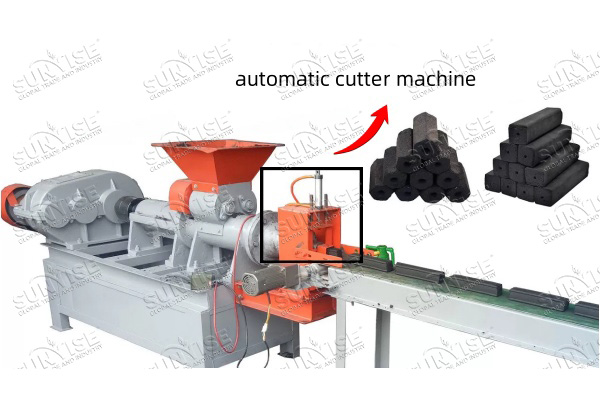
Once the sawdust is adequately dried, it moves on to the briquetting stage. This involves compressing the sawdust into dense, cylindrical shapes using a briquette press. The press applies high pressure and, in some cases, heat to bind the sawdust particles together without the need for additional binders. The pressure and temperature settings are critical to producing briquettes with the desired density and durability. The briquetting machine should be regularly maintained to ensure consistent performance and output.
Carbonization Process
After briquetting, the sawdust briquettes undergo carbonization. This involves heating the briquettes in a controlled environment to remove volatile substances, leaving behind pure carbon. The process is carried out in a carbonization furnace or kiln, which can be batch or continuous, depending on production requirements. The carbonization temperature is typically between 400°C and 600°C. Proper control of the carbonization process is essential to produce high-quality charcoal with minimal emissions.
Quality Control and Packaging
Quality control is an integral part of the sawdust charcoal briquette production process. The briquettes should be tested for parameters such as density, moisture content, and calorific value to ensure they meet the required standards. Any defective briquettes are recycled back into the production process. Once quality is assured, the briquettes are cooled and packaged for distribution. Packaging should protect the briquettes from moisture and physical damage during transportation and storage.
Environmental and Economic Benefits
Producing sawdust charcoal briquettes offers numerous environmental and economic benefits. By utilizing wood waste, the process reduces landfill waste and promotes sustainable forestry practices. The briquettes provide a cleaner-burning alternative to conventional charcoal or coal, reducing air pollution and greenhouse gas emissions. Economically, the production of charcoal briquettes creates jobs and supports local industries, contributing to economic development in rural areas.
Conclusion
The process of making 1 t/h sawdust charcoal briquettes involves several stages, each requiring careful attention to detail to ensure product quality and efficiency. From raw material preparation to carbonization, each step plays a critical role in producing a sustainable and environmentally friendly energy source. As demand for renewable energy sources continues to grow, the production of sawdust charcoal briquettes presents a viable solution for meeting energy needs while minimizing environmental impact.
Leave a Reply