Introduction
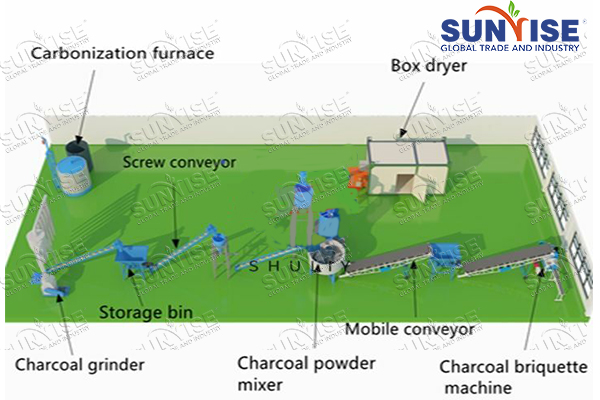
Charcoal briquettes made from bamboo are a sustainable alternative to traditional charcoal. Bamboo is a rapidly renewable resource, and using it for charcoal production can help reduce deforestation, minimize carbon emissions, and create economic opportunities for local communities. This passage outlines the process of producing charcoal briquettes from bamboo, covering steps such as harvesting, carbonization, crushing, mixing, briquetting, drying, and packaging.
Harvesting
Selecting Bamboo
The first step in producing bamboo charcoal briquettes is selecting the right bamboo. It is essential to choose mature bamboo, typically around 3-5 years old, as it has higher cellulose content and better carbonization properties. Harvesting bamboo at the correct maturity ensures optimal yield and quality of the charcoal.
Cutting and Transporting
Once selected, the bamboo is cut into manageable lengths, usually around 1-2 meters. It is then transported to the processing facility. Care should be taken during cutting and transportation to avoid damage to the bamboo, which can affect the quality of the final product.
Carbonization
Preparing the Kiln
Carbonization is the process of converting bamboo into charcoal by heating it in the absence of oxygen. This is typically done in a kiln. Traditional kilns, such as earth kilns, can be used, but more modern and efficient methods involve the use of metal kilns or retorts. The kiln is prepared by stacking the bamboo inside and sealing it to ensure a low-oxygen environment.
Carbonization Process
The carbonization process involves heating the bamboo to a temperature of about 500-700°C. This process takes several hours and must be carefully controlled to ensure complete conversion of bamboo to charcoal. The bamboo undergoes pyrolysis, breaking down into carbon, volatile gases, and tar. The gases and tar are often captured and used as by-products.
Crushing
Breaking Down the Charcoal
After carbonization, the bamboo charcoal is cooled and then crushed into a fine powder. This can be done using a hammer mill or other crushing equipment. The goal is to achieve a uniform particle size, which is essential for the next steps in the briquette production process.
Sieving
The crushed charcoal powder is then sieved to remove any large particles or impurities. This ensures a consistent quality for the final briquettes and improves their burning efficiency.
Mixing
Binder Preparation
To form the charcoal powder into briquettes, a binder is needed. Common binders include starch, clay, or molasses. The binder is prepared by dissolving it in water to create a sticky solution that will help hold the charcoal particles together.
Mixing Process
The charcoal powder is thoroughly mixed with the binder solution in a mixing machine. The ratio of charcoal to binder and the mixing time are critical factors that influence the quality and durability of the briquettes. Ensuring a homogenous mixture is essential for producing high-quality briquettes.
Briquetting
Forming the Briquettes
The mixture is then fed into a briquetting machine, which compresses it into the desired shape and size. There are various types of briquetting machines, including screw, hydraulic, and roller presses. The choice of machine depends on the scale of production and the specific requirements of the briquettes.
Quality Control
After forming, the briquettes are inspected for defects such as cracks or uneven shapes. Consistency in size and shape is important for packaging and end-user satisfaction. Any defective briquettes are reprocessed.
Drying
Drying Methods
The freshly formed briquettes contain a significant amount of moisture that must be removed to improve their burning efficiency. This can be done using natural sun drying or more controlled methods such as using a drying oven or kiln. Drying time varies depending on the method used and environmental conditions.
Monitoring
During drying, it is important to monitor the moisture content of the briquettes to ensure they reach the desired level. Over-drying can make the briquettes brittle, while under-drying can affect their combustion properties.
Packaging
Packaging Materials
Once dried, the briquettes are ready for packaging. They can be packed in various materials, such as plastic bags, cardboard boxes, or bulk containers. The choice of packaging depends on the target market and transportation requirements.
Labeling and Storage
Proper labeling with information such as weight, production date, and usage instructions is essential for consumer information and quality assurance. The packaged briquettes should be stored in a dry and cool place to maintain their quality until they reach the end user.
Conclusion
Producing charcoal briquettes from bamboo is a sustainable and efficient process that can help reduce reliance on traditional wood charcoal, mitigate deforestation, and provide economic opportunities. By following the steps of harvesting, carbonization, crushing, mixing, briquetting, drying, and packaging, high-quality bamboo charcoal briquettes can be produced, contributing to a cleaner and more sustainable energy source. Visiting: https://www.char-molder.com/product/bamboo-charcoal-briquette-plant/
Leave a Reply