Define Your Goal and Target Market First
Building a biochar production line starts with deciding what “biochar” means for your business. Biochar for soil amendment needs stable carbon, low contaminants, and consistent particle size, while biochar for filtration or industrial use may require higher surface area and tighter specifications. Your target market determines the feedstock you can use, the level of processing required, and what testing (moisture, ash content, fixed carbon, pH, heavy metals) you must pass. Clarifying these requirements early prevents costly redesigns later.
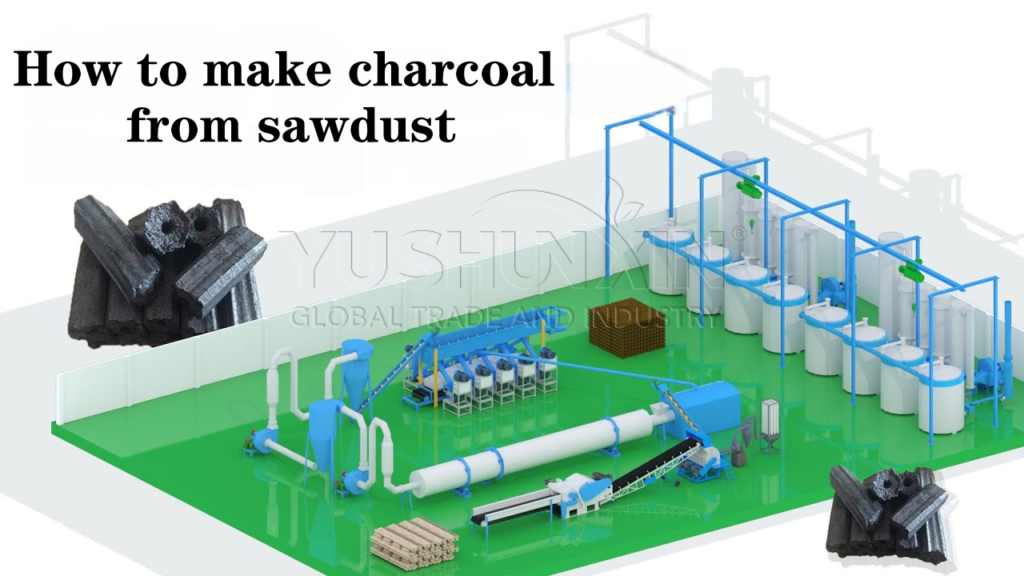
Choose Feedstock and Plan Pre-Processing
Common feedstocks include wood chips, sawdust, rice husk, coconut shells, and agricultural residues. The right equipment depends heavily on feedstock form and moisture. A typical pre-processing section includes a crusher or chipper (to standardize size), a screening system (to remove stones and fines), and a dryer if moisture is high. Moisture control is crucial because wet material reduces throughput and increases energy use. Many successful lines aim for a stable input moisture level so the reactor can run continuously without quality swings.
Select the Pyrolysis System (The Core of the Line)
The pyrolysis reactor is the heart of the production line, and you generally choose between batch kilns, semi-continuous units, and continuous pyrolysis systems. Batch equipment is cheaper and simpler but labor-intensive and less consistent. Continuous systems cost more but deliver steady output, better temperature control, and easier scaling. Look for a design that can maintain stable pyrolysis temperatures, handle your chosen feedstock without bridging or clogging, and includes reliable sealing to avoid oxygen ingress, which can lower yield and create safety issues.
Add Energy Recovery and Emissions Control
A well-designed biochar line treats gas and smoke as resources, not waste. Many systems combust pyrolysis gas to provide heat for the reactor or for a dryer, cutting fuel costs and improving ROI. Emissions control equipment—afterburners, cyclones, condensers, scrubbers, and chimneys designed for proper draft—helps meet environmental rules and improves neighborhood acceptance. In many locations, compliance is what determines whether the line can operate consistently over the long term.
Post-Processing: Cooling, Crushing, and Packaging
After pyrolysis, biochar must be cooled in a controlled way to prevent re-ignition. Equipment may include sealed coolers, water quench systems (with careful wastewater handling), and conveyors designed for dusty materials. Depending on product requirements, you may add a crusher, mill, and screening unit to achieve a specific particle range. Finally, packaging options include bulk bags, small retail bags, or pelletizing and briquetting for easier handling and reduced dust.
Quality Control and Scaling the Line
To build a “right equipment” line, include sampling points, basic lab tools, and routine testing procedures from the beginning. Consistent quality is what secures repeat customers and premium pricing. When scaling, prioritize bottlenecks—drying capacity, reactor throughput, and cooling time—so the entire line grows together rather than creating idle equipment and wasted capital. Visiting: https://www.char-molder.com/product/biochar-production-equipment/
Leave a Reply