Introduction to Rice Husk Charcoal Briquettes
Rice husk, a by-product of rice milling, is abundant in many agricultural regions. Traditionally considered waste, rice husks have gained recognition for their potential in producing charcoal briquettes. These briquettes serve as a sustainable and efficient alternative to conventional fossil fuels, contributing to waste reduction and energy conservation. This article explores the machinery involved in transforming rice husks into charcoal briquettes, detailing each step of the production process.
Pre-processing: From Husk to Powder
Grinding Machines
The first stage in the production of rice husk charcoal briquettes involves grinding the husks into a fine powder. Specialized grinding machines are employed for this task, designed to handle the fibrous nature of rice husks. These machines use high-speed rotating blades to pulverize the husks, ensuring a consistent and fine texture necessary for uniform briquette formation. The grinding process is crucial as it increases the surface area of the husks, enhancing their combustibility.
Drying Equipment
Moisture content is a critical factor in the briquette production process. Before converting husk powder into briquettes, the material must be adequately dried. Industrial drying machines, such as rotary dryers or flash dryers, are utilized to reduce moisture content to optimal levels, typically below 10%. These machines ensure consistent drying, which is essential for producing high-quality briquettes that burn efficiently and cleanly.
Briquetting: Molding Charcoal
Mixing and Binding Machines
To form rice husk powder into briquettes, a binding agent is usually necessary. Mixing machines blend the dried husk powder with binders such as starch or molasses, creating a cohesive mixture. This step is pivotal in ensuring the briquettes maintain their shape during handling and burning. The mixing machines are equipped with paddles or blades that ensure even distribution of the binder throughout the husk powder.
Briquette Press Machines
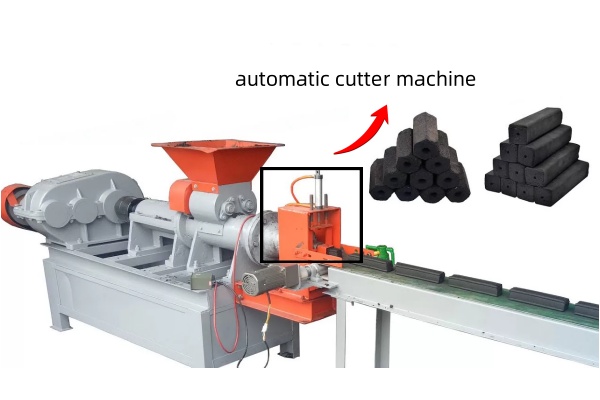
The core of the briquette production process is the briquette press machine. These machines compress the prepared mixture into the desired briquette shape and size, applying high pressure and sometimes a moderate amount of heat. There are two primary types of briquette press machines: screw extruders and hydraulic presses. Screw extruders use a rotating screw to push the mixture through a die, forming cylindrical or hexagonal briquettes. Hydraulic presses, on the other hand, use hydraulic pistons to compress the mixture, allowing for customizable briquette shapes and sizes.
Post-production and Quality Assurance
Cooling and Drying Systems
Once formed, the briquettes need to be cooled and further dried to harden and stabilize their structure. Cooling conveyors or additional drying chambers are often used to achieve this. Proper cooling and drying ensure that the briquettes are robust, durable, and ready for packaging and distribution.
Quality Control Measures
Quality assurance is essential in the production of rice husk charcoal briquettes. Testing equipment is employed to assess parameters such as moisture content, density, and combustion efficiency. Consistent quality control ensures that the briquettes meet industry standards and provide reliable performance as a fuel source. If you want to make small scale rice husk biochar briquette, it can also meet your requirements.
Conclusion: Advancing Sustainable Energy Solutions
The machinery involved in producing rice husk charcoal briquettes highlights a transformative process that turns agricultural waste into valuable energy resources. From grinding and drying to mixing, pressing, and quality control, each step is essential for creating efficient and sustainable briquettes. As technology advances, these machines will continue to evolve, enhancing the efficiency and sustainability of biofuel production. This process not only addresses waste management but also contributes to the global shift towards renewable energy solutions, fostering a more sustainable future. Visiting:
Leave a Reply