Investors in a biomass carbonization project need technical, commercial and execution due diligence before they rely on a supplier’s capacity claim. The biomass carbonization plant project delivery depends on feedstock, dryer performance, continuous carbonization, syngas handling, char cooling and product screening. due diligence reviews contracts, permits, site conditions, operating assumptions and the ability of the management team to deliver. A strong proposal shows measured biomass data, a realistic mass balance and a clear plan for product sales. It also identifies the party responsible for every interface and performance guarantee. The review protects capital from optimistic projections and gives the investor a defensible basis for approval, delay or restructuring.
Which feedstock and technology checks belong in biomass carbonization plant project delivery review?
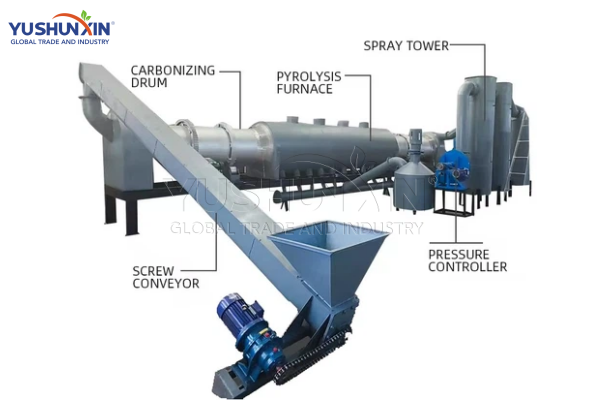
The review tests moisture, particle size, ash and seasonal supply for each planned biomass source. A due diligence for biomass carbonization investment compares those values with the dryer, feeder, furnace and gas system specifications. An independent engineer checks the mass and energy balance, residence time and cooling load. The team also visits a reference plant or reviews factory test evidence for comparable feedstock. A supplier that cannot explain how the continuous carbonization line handles variation creates an execution risk. The investor should approve a technical route only when the measured input and the guaranteed output belong to the same operating basis.
How should investors assess permits, utilities and site readiness?
The project must show land tenure, environmental classification, air permits and a route for ash or residue. A biomass carbonization project investor review reviews power, water, drainage, fire protection and access for equipment delivery. Utility capacity matters because dryer fans, furnace drives and gas treatment equipment operate continuously. The site plan also needs space for feedstock storage and finished biochar. A delayed utility connection can stop commissioning even when the machinery arrives on time. The investor compares the permit timeline with the construction schedule and checks whether the project team has reserved the required capacity. A site that looks cheap can create a larger cost through delay and redesign.
Which commercial assumptions deserve scrutiny before approving a carbonization project?
The model should rest on contracted or well-documented feedstock and credible buyers for biochar, carbon removal units and any by-product. The charcoal briquette production line route can improve utilization when demand exists, but the investor must treat it as an additional business rather than a guaranteed income stream. Operating cost needs realistic labor, energy, maintenance and transport. The financial review tests lower yield, higher moisture and a delayed ramp-up. It also checks who owns the environmental attributes and what happens if certification takes longer than expected. These questions turn an attractive technology story into a cash-flow case that survives normal market and execution uncertainty.
Which contract and management controls protect the investor after approval?
The investment agreement sets milestones for design, permits, procurement, installation and performance testing. The owner holds retention until the plant meets capacity and product-quality criteria with representative biomass. The contract names the responsible party for interface issues and provides a priced change process. Management reports actual spending, schedule and commissioning progress every month. Investors review independent technical reports and have the right to inspect critical equipment before shipment. A spare-parts and operator-training plan protects the first year of operation. These controls connect capital release with evidence and reduce the chance that a delayed plant consumes the full budget before it produces saleable output.
Conclusion for investors in biomass carbonization projects
Investor protection starts with measured feedstock, a credible technical route and a site that can support continuous operation. Due diligence must also test permits, product demand, capital cost and the management plan for commissioning. A carbonization project due diligence support that reviews the mass balance and contract structure helps the investor identify gaps before commitment. Milestone payments and independent testing connect funding with real progress. The continuous carbonization furnace reference appears at https://www.char-molder.com/product/continuous-carbonization-furnace/ for the next due diligence review.