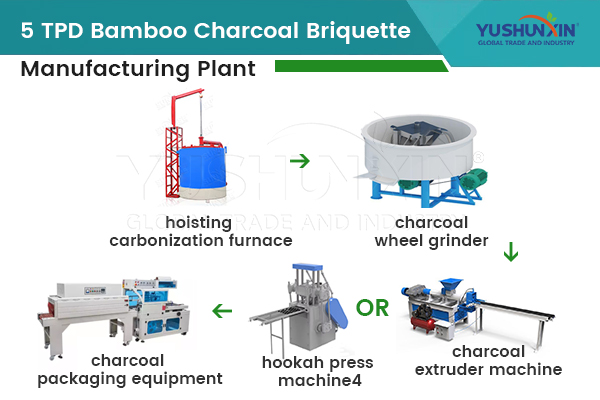
The charcoal briquette production line processing capacity follows the press, the mixer and the carbonization feed, and the yield (chemistry) of each stage decides how much product leaves the plant. You, as an EPC contractor or as a recycling company manager, examine the charcoal briquette production line processing capacity against the residue volume of the region before the order. A line that exceeds the supply runs below its design rate.
Which unit limits the capacity?
The press, the mixer and the dryer each carry a rated throughput, and the smallest unit sets the capacity of the whole line. A design for highest recovery in briquette production review measures the cycle time of each unit, and that measurement shows the bottleneck. You compare the rated values with the values at the design moisture. The result then points to the unit that needs the upgrade.
How does the carbonization feed fit the line?
The press accepts a char with a defined particle size and a defined moisture, and a material outside that range produces a weak briquette. A carbonization feed capacity for briquetting design places the cooler and the screen before the press, and that order protects the mould. You test the local char, because the same recipe behaves differently with a different fibre. The press then runs with a stable recipe.
How does the design raise the recovery rate?
A closed material path and a dust collection system capture the fine fraction that would otherwise leave the line, and that capture raises the recovery rate without new capacity. A capacity design for a briquette line also includes a return conveyor for the rejected briquettes, because those units return to the mixer instead of becoming waste. You measure the fines and the rejects each shift. The plant then shows a measured recovery rate.
How does the contractor verify the capacity?
A full-shift test with the design feedstock gives the achieved tonnage, and that figure becomes the performance value of the contract. You keep the weighbridge tickets and the operating log, because the two records show whether a shortfall comes from the equipment or from the feeding. The contractor then corrects the bottleneck before the handover. The plant receives a measured capacity.
Conclusion for EPC contractors and recycling companies
Capacity and recovery improve when the press, the feed and the fines capture work as one circuit, and the test proves the result. A briquette capacity advisors team that supplies the throughput balance, the layout and the test protocol helps the contractor deliver the line. The demand for briquettes keeps the plant valuable, and a line with a high recovery serves that demand profitably. If your team needs a reference for the line configuration and the capacity scope, you can learn more about https://www.char-molder.com/product/charcoal-briquette-production-line/ before the next design review. The same test report also supports the warranty discussion with the press supplier, and that document shows whether the unit delivers the throughput and the recovery written in the contract during the first year of operation.