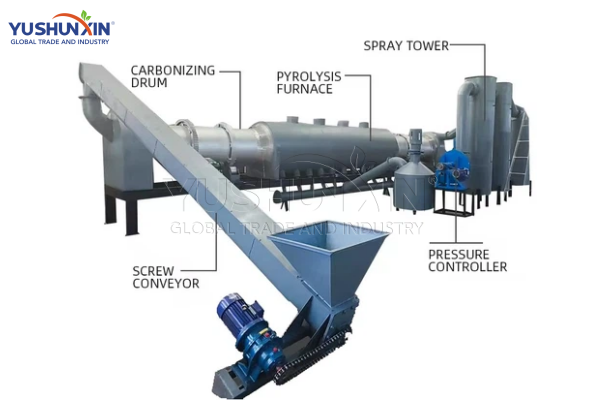
A waste heat recovery system solution performs well when the waste stream carries enough temperature and enough flow for the exchanger, and the choice of stream therefore comes before the choice of equipment. You, as a plant engineering manager or as a project developer, examine the waste heat recovery system solution against the streams that the site already produces. The wood fuel route of a carbonization plant offers one of the most stable streams in the sector.
Which streams are available on an industrial site?
The exhaust of a dryer, the off-gas of a reactor and the cooling air of a kiln form the three streams that most sites can use. A waste stream selection for heat recovery review measures the temperature and the flow of each stream, because a low temperature limits the useful output. You also examine the dust content, since a dirty stream requires a larger cleaning section. The measurement then ranks the streams.
How does the reactor off-gas compare with the dryer exhaust?
The reactor off-gas carries a higher temperature and a combustible content, and that combination allows both heat recovery and gas reuse. A charcoal production waste stream for heat recovery design places the exchanger after the cyclone and returns the gas to the burner, and that arrangement delivers two savings. You compare the two streams on the same plant, and the comparison shows the off-gas as the better option. The best waste stream for a heat recovery system then becomes the one with the highest stable duty.
How does the stream quality affect the design?
The dust and the acid components decide the exchanger material and the cleaning arrangement, and a poor stream raises the maintenance cost. You select a counter-flow exchanger with a cleaning access when the stream carries dust, and that choice protects the surface. The control system then maintains the outlet temperature above the acid dew point. The design reaches a stable recovery rate.
How does the plant verify the choice?
A trial with the selected stream gives the real recovered energy, and that figure confirms the design. You compare the trial result with the heat balance, and the comparison shows whether the exchanger meets its duty. The plant then reports the saving per month. The developer uses the result for the next phase. The same result also justifies the second exchanger on the dryer line and the extra surface area, and the same logic applies to the cooling section of the next line.
Conclusion for plant engineering managers and developers
The best waste stream is the one with the highest stable temperature and the lowest cleaning burden, and the measurement decides that choice. A heat recovery stream advisors team that supplies the stream survey, the exchanger design and the control logic helps the plant recover more energy. The cost of industrial fuel keeps rising, and a recovery system that uses the best stream protects the operating margin. If your team needs a reference for the line configuration and the stream scope, you can learn more about https://www.ysxcharpro.com/product/palm-charcoal-production-line/ before the next design review.