Companies that generate wood waste, rice husk or agricultural residue compare two options, and you, as a plant manager or as an industrial investor, measure the difference between paying a disposal fee and building a production line that sells a finished product. The charcoal briquette production line cost covers the crusher, the dryer, the carbonization furnace, the mixer, the press and the packing section. That cost then competes with the recurring fee of landfill or open burning, and the comparison usually favours the production route when the plant operates more than two thousand hours a year.
Which cost items belong to a briquette production line?
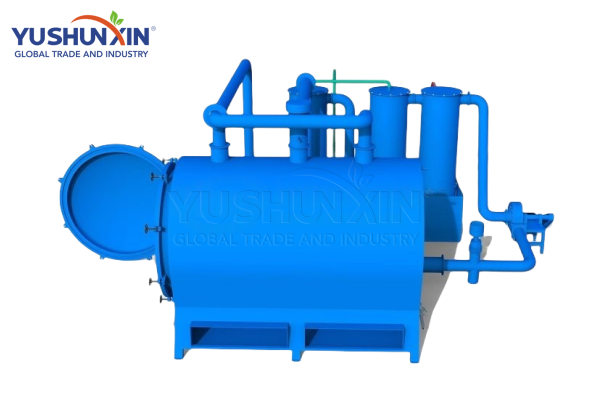
The equipment group covers the shredder, the rotary dryer, the carbonization furnace, the grinder, the mixer, the briquette press and the packing machine. The civil group covers the process hall, the storage area and the foundation of each heavy unit. The utility group covers electricity, thermal energy, water and the dust collection system. The service group covers installation, training, spare parts and commissioning, and that group often decides whether the line reaches its rated output on time.
Which costs belong to conventional waste treatment?
Landfill fees grow with the volume and with the local regulation, and that growth makes the long term cost difficult to predict. Transport to the disposal site adds a logistic cost that rises when the material has low density. A briquette line cost compared with waste treatment analysis also includes the permit and monitoring cost of the disposal route, because those items appear every year without producing revenue. Your finance team collects these figures for the last three years and projects them forward.
How does the production route generate revenue?
Briquette sales provide the main income, and that income depends on the local price for household fuel, barbecue charcoal and industrial fuel. A continuous carbonization furnace for briquette production supplies the char that the press densifies, so the two sections work as one system. Biochar for soil application and for carbon removal programmes represents a second market when the national framework recognises it. Your commercial plan signs buyers before commissioning, and that plan supports the revenue forecast.
How do you compare the two options fairly?
The comparison uses the same residue volume, the same operating hours and the same labour cost in both cases. A charcoal briquette line investment analysis then calculates the net present value and the payback period of the production route, and presents them next to the projected disposal cost. Your finance team tests the case with a lower product price, and the sensitivity table shows the break even tonnage. The board then decides with a documented comparison rather than with a general impression.
Conclusion for plant managers and industrial investors
The production route converts a recurring cost into an asset that generates revenue and reduces the volume sent to landfill. A charcoal briquette line cost engineers team that supplies capacity data, energy figures and commissioning support helps your company validate the investment case. Stable product quality also protects the price in the local market, and that stability starts with a well configured line. If your team needs a reference for the equipment list and the cost structure, you can learn more about https://www.char-molder.com/product/charcoal-briquette-production-line/ before the next budget review.