A Continuous Carbonization Machine for Sale is not just a piece of equipment. It is a long-term production system that directly determines your output stability, operating cost, and product quality. Many buyers focus only on price, but experienced investors compare the full system logic before making a decision.
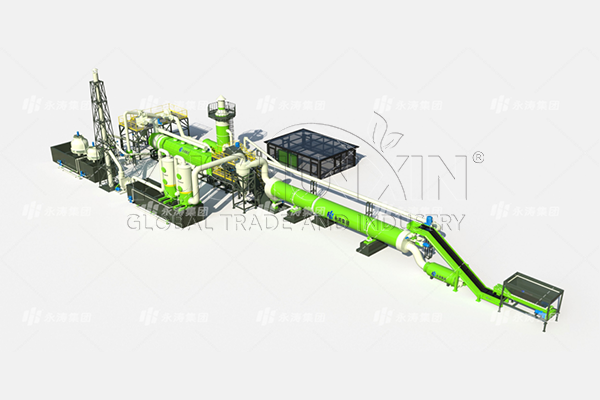
1. Raw Material Compatibility and Feeding Stability
The first thing to evaluate is whether the machine can handle your real feedstock consistently.
A proper continuous carbonization system should support:
- Biomass (wood, coconut shell, rice husk)
- Agricultural waste (straw, corn stalks)
- Industrial residues (some rubber and mixed organic waste)
From a process perspective, feeding stability is critical. Many systems use hydraulic feeding or pre-compression devices to increase density and improve furnace efficiency .
If feeding is unstable, the whole pyrolysis process becomes uneven, leading to low carbon yield and unstable gas output.
2. Reactor Design and Heating System
The reactor structure determines whether production is truly continuous or semi-continuous.
Key points to compare:
- Furnace sealing performance
- Heat distribution uniformity
- Carbonization chamber length (often 28–40m in tunnel-style systems)
- Multi-zone temperature control design
A well-designed system divides the furnace into multiple temperature zones to ensure gradual pyrolysis and stable carbon output .
3. Discharge System and Carbon Quality
Discharge design directly affects carbon purity and production efficiency.
Buyers should check:
- Continuous discharge vs batch discharge
- Cooling method (water cooling / air cooling)
- Carbon discharge temperature control
Poor cooling or unstable discharge can lead to:
- Carbon oxidation
- Lower fixed carbon content
- Higher ash residue
4. Emission Control and Environmental Compliance
Modern buyers must consider environmental regulations from the beginning.
A reliable system should include:
- Gas recycling or combustion system
- Dust collection units
- Oil gas purification system
Pyrolysis systems often process materials like tires, plastic, oil sludge, and biomass, which all require strict gas treatment and controlled emissions .
5. Energy Consumption and Operating Cost
Energy efficiency is a major cost driver.
You should compare:
- Fuel type (syngas, diesel, natural gas)
- Self-sustaining energy ratio
- Heat recovery system
- Power consumption of auxiliary equipment
A good continuous carbonization system can reuse part of its own pyrolysis gas to reduce external fuel demand.
6. Automation Level and Control System
Higher automation reduces labor dependency and improves stability.
Key functions to check:
- PLC control system
- Temperature monitoring in real time
- Automatic feeding and discharge synchronization
- Safety alarm system
Automation is especially important for continuous operation projects aiming at 24/7 production.
7. Manufacturer Experience and Engineering Support
Finally, buyers should evaluate the supplier’s engineering capability.
Important indicators include:
- Turnkey project experience
- Installation and commissioning support
- Spare parts availability
- Long-term technical service
A continuous carbonization machine is not a standalone product—it is a full engineering project that requires system-level design and support.
Conclusion
Before ordering a Continuous Carbonization Machine for Sale, buyers should not only compare price. They should evaluate the full system from feeding stability to emission control and long-term operating cost.
The best investment is not the cheapest machine, but the most stable production system that fits your raw material, output target, and local environmental requirements. Visiting: https://www.ysxcharpro.com/product/continuous-carbonization-furnace/
Leave a Reply