Introduction
The production of sawdust biochar briquettes using a rod making machine is a sustainable and efficient method for converting wood waste into a valuable energy source. These briquettes serve as an eco-friendly alternative to traditional fossil fuels, providing a renewable solution for heating and cooking needs. This passage will provide a detailed overview of the process, covering stages such as raw material preparation, drying, pyrolysis, mixing, rod making machine operation, cooling, and packaging.
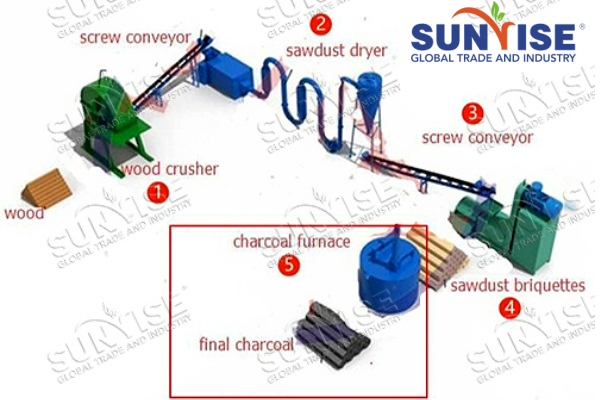
Raw Material Preparation
Collecting Sawdust
The first step in producing sawdust biochar briquettes is to source high-quality sawdust. Sawdust can be collected from sawmills, woodworking factories, and other wood processing facilities. It is essential to ensure that the sawdust is free from contaminants like nails, plastics, or other non-organic materials that could adversely affect the briquetting process and the quality of the final product.
Sizing and Screening
To achieve optimal briquetting results, the sawdust should be of uniform size. Screening the sawdust to remove oversized particles and foreign materials is a crucial step. If necessary, larger wood pieces can be ground down to the appropriate size using a hammer mill or wood chipper.
Drying
Moisture Content Management
Proper moisture content is critical for efficient biochar production and briquette formation. The sawdust should ideally have a moisture content between 8% and 12%. Excess moisture can impede the pyrolysis process and reduce briquette quality.
Drying Methods
Sawdust can be dried using natural methods like air drying or through mechanical dryers such as rotary drum dryers or belt dryers. Mechanical drying allows for more precise control over moisture content and speeds up the drying process, making it ideal for large-scale production.
Pyrolysis
Biochar Production
Pyrolysis is the process of heating organic material in the absence of oxygen to produce biochar. For sawdust, this typically occurs at temperatures between 400°C and 600°C. The sawdust is fed into a pyrolysis reactor where it decomposes into biochar and volatile gases.
Reactor Types
There are various types of pyrolysis reactors, including batch kilns, continuous retorts, and advanced pyrolysis units. The choice of reactor depends on production scale, cost, and operational preferences. Continuous reactors are often favored for large-scale operations due to their efficiency and consistency.
Mixing and Binders
Binder Selection
To form cohesive briquettes, the biochar must be mixed with a binder. Common binders include starch, molasses, and clay. The binder helps to hold the biochar particles together, ensuring the briquettes maintain their shape and durability.
Homogeneous Mixing
Thorough mixing of biochar and binder is essential. The mixture should be homogeneous to ensure that the binder evenly coats the biochar particles, facilitating uniform briquette formation during the compression process.
Rod Making Machine Operation
Machine Setup
A rod making machine, also known as an extruder, is used to compress the biochar mixture into rod-shaped briquettes. The machine should be set up according to the manufacturer’s specifications, including adjustments for pressure, temperature, and extrusion speed.
Feeding and Extrusion
The biochar mixture is fed into the hopper of the rod making machine. The machine uses a screw or piston mechanism to apply high pressure, forcing the mixture through a die to form continuous rods of biochar briquettes. The extrusion pressure and temperature are critical factors influencing the density and strength of the final product.
Cutting and Shaping
As the continuous rod exits the machine, it is cut into uniform lengths using a cutting mechanism. The length of the briquettes can be adjusted based on market requirements and user preferences.
Cooling and Packaging
Cooling Process
The freshly extruded briquettes are hot and need to be cooled to prevent cracking or breaking. Cooling can be achieved through natural air cooling or by using cooling conveyors, which speed up the process and prepare the briquettes for packaging.
Packaging Options
Once cooled, the briquettes are packaged to protect them from moisture and mechanical damage during transportation and storage. Packaging options include plastic bags, cardboard boxes, or bulk containers, depending on distribution needs.
Conclusion
Producing sawdust biochar briquettes using a rod making machine is a multi-step process that requires attention to detail at each stage. From raw material preparation and drying to pyrolysis, mixing, and extrusion, each step is critical in ensuring the production of high-quality, sustainable biochar briquettes. By converting waste sawdust into valuable energy products, this process not only provides a renewable fuel source but also contributes to environmental conservation and waste reduction. Understanding and optimizing these processes can help manufacturers meet the growing demand for eco-friendly energy solutions. Visiting: https://www.char-molder.com/product/sawdust-briquette-charcoal-making-machine/
Leave a Reply