Coconut shell charcoal briquettes have gained popularity as an eco-friendly alternative to traditional charcoal due to their high calorific value, low ash content, and sustainability. The process of converting coconut shells into charcoal briquettes involves several stages, each requiring specific machinery to ensure efficiency and quality. This passage delves into the various machines that are essential for making coconut shell charcoal briquettes, highlighting their functions and advantages.
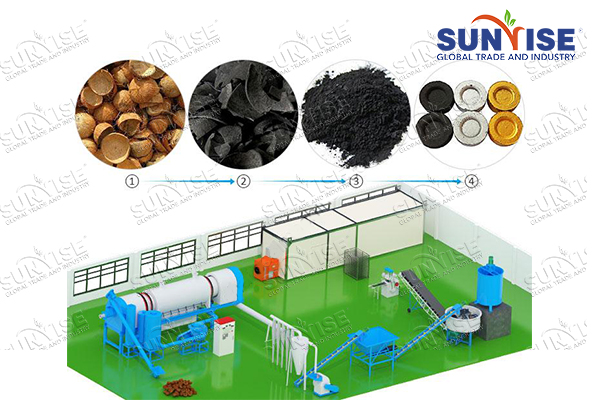
The Importance of Coconut Shell Charcoal
Eco-friendly and Sustainable
Coconut shell charcoal is considered an environmentally friendly fuel due to its renewable nature and low greenhouse gas emissions compared to conventional charcoal. The use of coconut shells, a byproduct of the coconut industry, reduces waste and promotes a circular economy, making it a sustainable choice for both domestic and industrial applications.
Essential Machinery for Charcoal Briquette Production
Carbonization Furnace
The carbonization furnace is the heart of the charcoal production process. It converts coconut shells into charcoal by heating them in a controlled, oxygen-deficient environment. This thermal decomposition process removes volatile compounds, resulting in pure charcoal. Modern carbonization furnaces are designed to maximize energy efficiency and minimize emissions, ensuring a cleaner production process.
Crusher
Once the coconut shells are carbonized, they need to be crushed into smaller particles to facilitate the briquetting process. Crushers are used to grind the charcoal into uniform sizes, enhancing the consistency and quality of the briquettes. A well-designed crusher ensures minimal dust production and maximizes the yield of usable charcoal particles.
Mixing Machine
The mixing machine plays a crucial role in preparing the charcoal mixture for briquetting. It combines the crushed charcoal with a suitable binder—often natural substances like starch or molasses—to enhance the strength and cohesiveness of the briquettes. The mixing machine ensures a homogeneous blend, which is vital for producing high-quality briquettes with consistent burning characteristics.
Briquette Press
The briquette press, or briquetting machine, is the final and most crucial piece of equipment in the production line. It compresses the charcoal-binder mixture into uniform shapes and sizes, such as logs, cubes, or pillow-shaped briquettes. Hydraulic or mechanical presses are commonly used, offering adjustable pressure and shaping capabilities to meet specific market demands. A reliable briquette press ensures high-density briquettes that burn longer and produce less smoke.
Advantages of Using the Right Machinery
Quality and Consistency
Utilizing the appropriate machinery for coconut shell charcoal briquette production ensures high-quality output with consistent size and shape, meeting consumer preferences and market standards.
Efficiency and Cost-effectiveness
Modern machinery enhances production efficiency by reducing manual labor, minimizing waste, and optimizing energy use. This results in cost savings and increased profitability for producers.
Environmental Benefits
Advanced machinery in charcoal production minimizes emissions and waste, contributing to environmental conservation and sustainability. By utilizing agricultural byproducts, it also supports waste reduction and resource optimization.
Conclusion
Investing in the right machinery is crucial for successful coconut shell charcoal briquette production. From carbonization furnaces to briquette presses, each machine plays a vital role in ensuring efficient, high-quality, and sustainable production. As technology continues to evolve, innovations in machinery promise further advancements in the industry, supporting a greener and more sustainable future. Visiting: https://www.char-molder.com/product/how-to-make-coconut-charcoal-briquettes/
Leave a Reply